Comparing Tempered Glass Doors, Laminated Glass Doors, and Insulated Glass Doors
1. Tempered Glass Doors
Construction
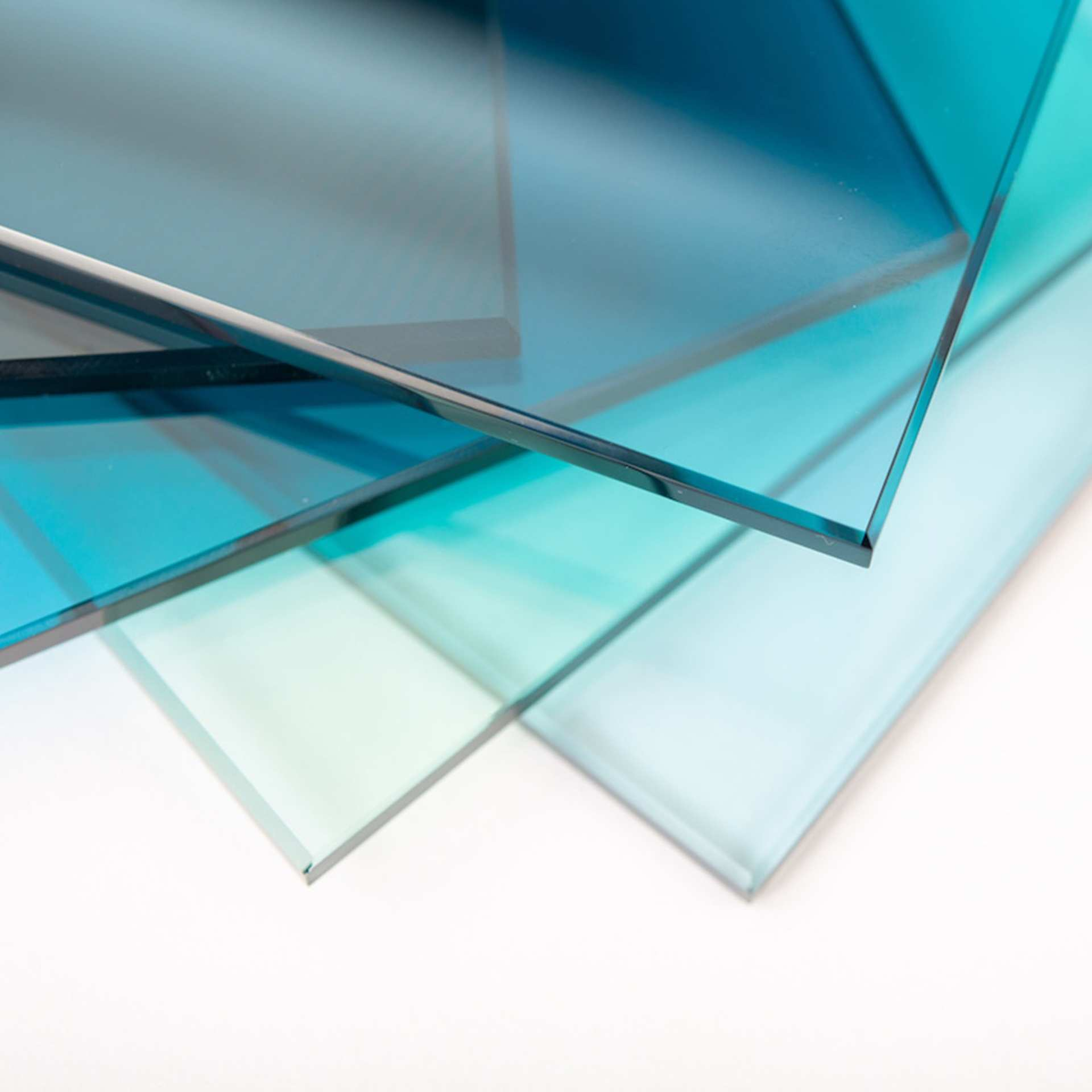
Tempered glass doors are made from a single pane of float glass that is heated to approximately 700°C (1,292°F) and then rapidly cooled with high-pressure air. This thermal tempering process creates compressive stresses on the glass surface, significantly increasing its strength and safety performance.
How to Identify Tempered Glass
- A permanent manufacturer's logo or certification mark is laser-etched or ceramic-printed in one corner of the glass (e.g., Tempered Glass, Hai Long Glass, Chu Lai Float Glass). The mark cannot be peeled off or removed.
- When viewed at an angle under reflected light, the glass surface may exhibit slight optical distortions or waviness caused by the tempering process.
- When gently tapped, tempered glass produces a clear, resonant sound compared to ordinary glass.
Benefits & Applications
- Approximately 4–5 times stronger than ordinary glass of the same thickness.
- Breaks into small, blunt-edged granules, greatly reducing the risk of injury.
- Excellent resistance to impact, wind loads, and thermal shock.
- Commonly used for:
- Frameless entrance doors
- Hydraulic glass doors
- Sliding office doors
- Shower enclosures
- Glass partitions
2. Laminated Glass Doors
Construction
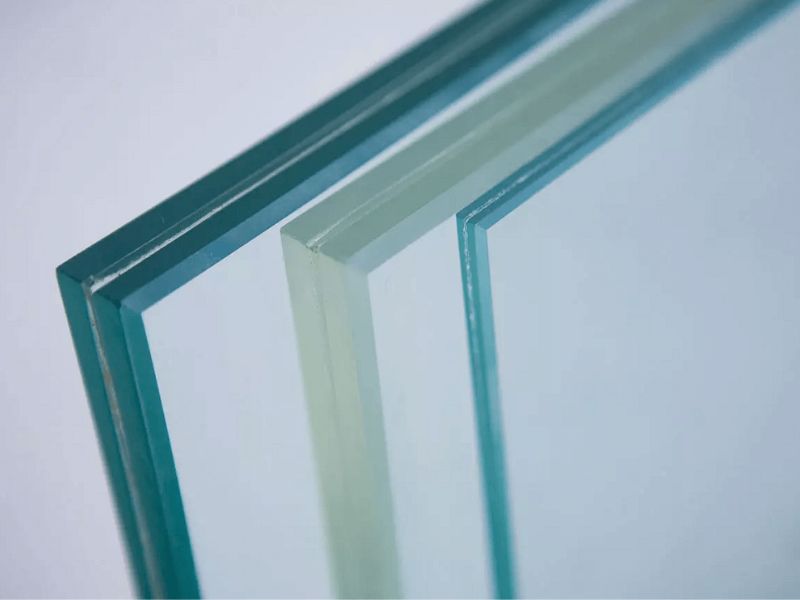
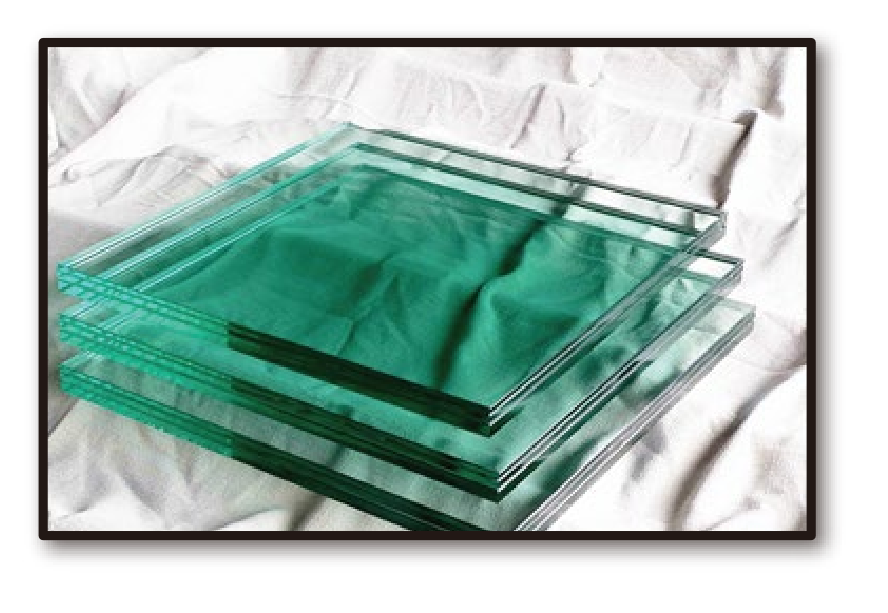
Laminated glass consists of two or more panes of glass—which may be annealed or tempered—bonded together with one or more PVB (Polyvinyl Butyral) interlayers under high temperature and pressure.
How to Identify Laminated Glass
- Looking closely at the edge of the glass, you can clearly see the thin PVB interlayer sandwiched between the glass panes.
- Laminated glass thickness typically includes decimal values due to the interlayer, such as:
- 6.38 mm
- 8.38 mm
- 10.38 mm
- 12.76 mm
Benefits & Applications
- When subjected to a severe impact, the glass develops a spiderweb crack pattern, while the broken fragments remain firmly bonded to the PVB interlayer instead of falling away.
- Provides excellent protection against accidental injury.
- Offers enhanced burglary resistance because the interlayer makes penetration much more difficult.
- Blocks up to 99% of harmful UV radiation, protecting occupants and interior furnishings.
- Commonly used for:
- Apartment windows
- Balcony doors
- Glass canopies
- Skylights
- Townhouse entrance doors
- Areas requiring enhanced security and safety
3. Insulated Glass Doors (Insulating Glass Units – IGUs / Double Glazing)
Construction
Insulated glass is one of the most advanced glazing systems available. It consists of two or more panes of glass separated by an aluminum spacer containing a moisture-absorbing desiccant.
The sealed cavity between the panes is filled with dry air or an inert gas such as argon, while the perimeter is sealed with high-performance structural silicone to ensure long-term airtightness.
How to Identify Insulated Glass
- It is the thickest and easiest type of glass to recognize.
- Looking through the edge of the unit, you will see a silver or black aluminum spacer running around the perimeter.
- The spacer contains tiny perforations that allow the desiccant to absorb residual moisture inside the sealed cavity.
- The overall thickness is typically 16 mm or greater, depending on the glazing configuration.
Benefits & Applications
- Delivers industry-leading sound insulation and thermal insulation.
- Effectively reduces noise from highways, airports, railways, and other high-noise environments.
- Minimizes solar heat transfer, improving indoor comfort and reducing energy consumption.
- Eliminates internal condensation caused by temperature differences.
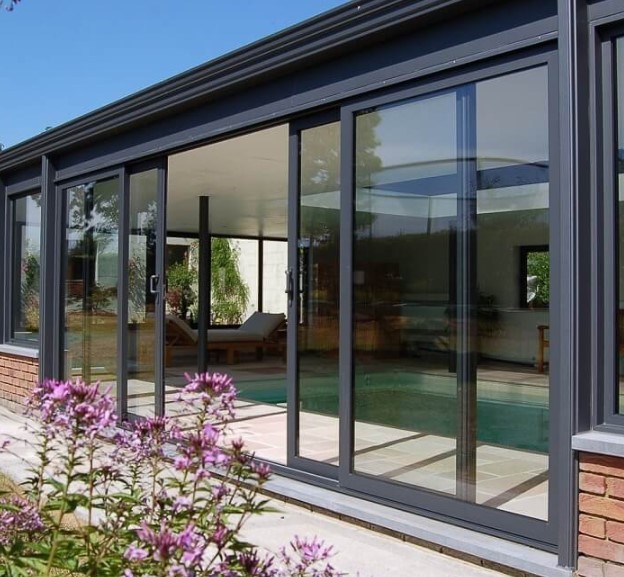
- Commonly paired with premium aluminum framing systems, such as Xingfa Aluminum or thermally broken aluminum systems, for:
- Luxury villas
- Commercial office buildings
- Hotels and resorts
- Recording studios
- Homes located along busy roads or in noisy urban environments